5 Warning Signs of Deep Vein Thrombosis You Should Never Ignore
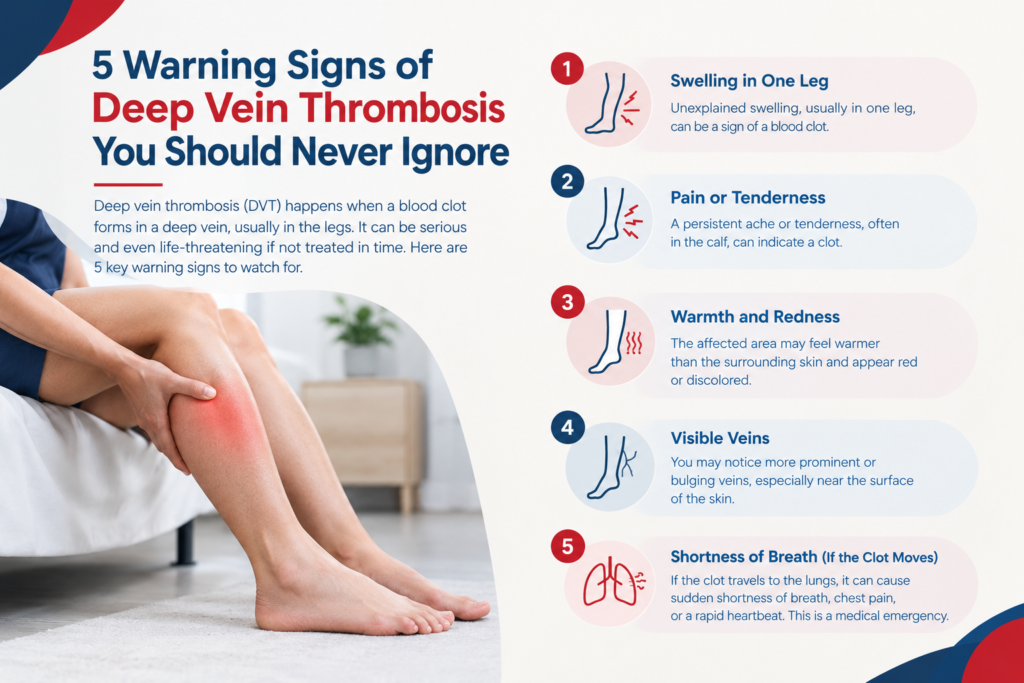
5 Warning Signs of Deep Vein Thrombosis You Should Never Ignore Introduction Deep vein thrombosis (DVT) occurs when a blood clot develops in a deep vein, most commonly in the lower leg, thigh or pelvis. Although some people may have no noticeable symptoms, DVT can become serious if part of the clot breaks away and travels to the lungs, causing a pulmonary embolism (PE). Recognising possible warning signs and seeking medical attention promptly can help reduce the risk of serious complications. What Is Deep Vein Thrombosis? DVT is a type of venous blood clot that can interfere with normal blood flow through a deep vein. It may develop after prolonged immobility, surgery, hospitalisation or other situations that increase the risk of clot formation. However, DVT can also occur in people without an obvious trigger. Importantly, symptoms alone cannot confirm DVT because other conditions can cause similar leg symptoms. Medical testing is needed to establish the diagnosis. 5 Warning Signs of a Blood Clot in the Leg 1. Swelling in One LegOne of the common signs of DVT is swelling in the affected leg. The swelling may develop around the calf, ankle or entire leg and may appear without an obvious injury. Unexplained swelling, particularly when it affects one side, should be medically assessed. 2. Persistent Leg or Calf PainA blood clot may cause pain, tenderness, cramping or aching in the affected area. The discomfort may occur without a recent injury and can sometimes become more noticeable when walking or standing. However, leg pain has many possible causes, so it should not be assumed to be DVT without appropriate evaluation. 3. Unusual Warmth in the Affected AreaThe skin over an affected vein may feel warmer than the surrounding area. When warmth occurs together with swelling, pain or skin changes, it can be an important reason to seek medical advice. 4. Redness or Skin DiscolorationDVT can cause redness or other changes in the colour of the skin over the affected area. This may occur along with swelling, tenderness or warmth. Because several skin and vein conditions can produce similar changes, proper assessment is important. 5. Tenderness Without an Obvious InjuryUnexplained tenderness in the calf or another part of the leg can occur with DVT. If tenderness develops together with swelling, warmth or discoloration, it should not be ignored, particularly in someone with known risk factors for blood clots. It is also important to remember that DVT may cause no symptoms at all. Therefore, the absence of these warning signs does not completely rule out a blood clot. Who May Have a Higher Risk of DVT? Certain situations can increase the risk of developing a blood clot. These include prolonged periods without movement, recent surgery or hospitalisation, certain injuries or illnesses, previous blood clots, cancer, increasing age and other individual risk factors. Long-distance travel can also increase risk, particularly when combined with other risk factors. When Should You Seek Medical Attention? If you develop unexplained swelling, pain, tenderness, warmth or skin discoloration in a leg, contact a healthcare professional promptly. A vascular doctor may assess your symptoms, medical history and risk factors and determine whether further testing is necessary. Do not wait for leg symptoms to become severe before seeking care. Early evaluation can help distinguish DVT from other conditions with similar symptoms. Sudden Breathing Problems Require Emergency Care A DVT can become life-threatening if part of the clot travels to the lungs and causes a pulmonary embolism. Warning signs can include sudden difficulty breathing, chest pain that may worsen with deep breathing or coughing, a rapid or irregular heartbeat, dizziness or fainting, and coughing up blood. These symptoms require immediate emergency medical attention. How Is DVT Diagnosed? Doctors use a combination of medical history, physical examination and diagnostic tests to determine whether a blood clot is present. Duplex ultrasound is the standard imaging test used to detect DVT in the deep veins. Depending on the circumstances, a D-dimer blood test may also be used as part of the diagnostic process. What Does Treatment Usually Involve? The approach to dvt treatment depends on the location and severity of the clot and the person’s overall health. Anticoagulant medicines, commonly called blood thinners, are frequently used to prevent the clot from growing and reduce the risk of additional clots. In selected severe cases, procedures or clot-dissolving medicines may be considered. Early Attention to Symptoms Can Help Protect Vascular Health DVT should not be diagnosed based on symptoms alone, but unexplained changes such as one-sided leg swelling, pain, warmth or skin discoloration deserve timely medical attention. Recognising the warning signs and getting appropriate testing can help identify a clot and allow suitable treatment to begin before serious complications develop.