
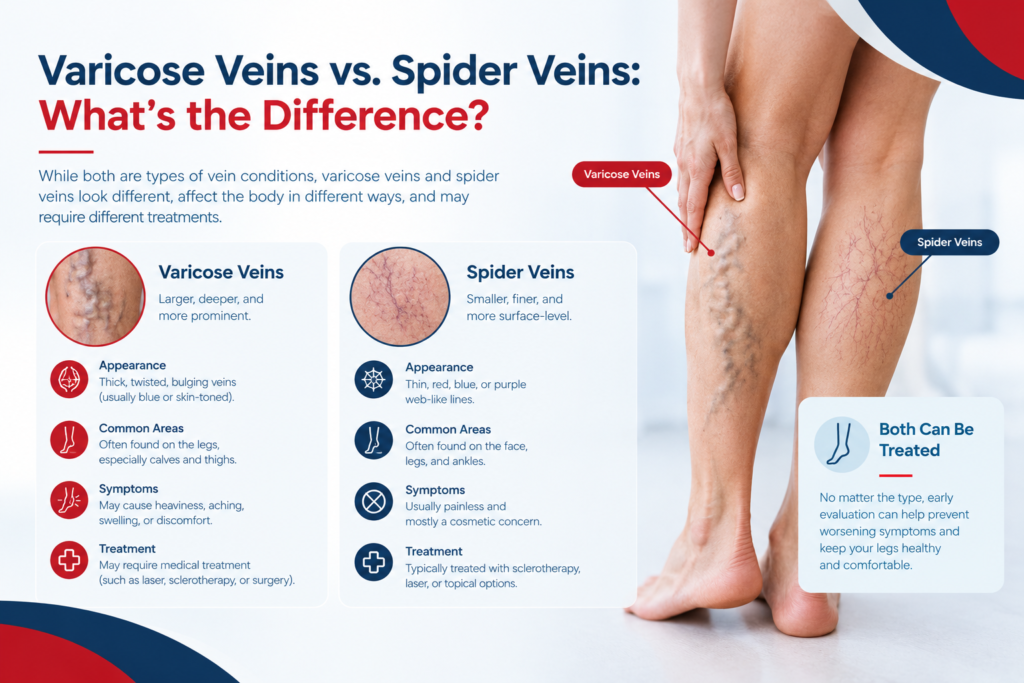
Varicose Veins vs. Spider Veins: What’s the Difference?
Introduction
Understanding these differences can help you recognise when visible veins are mainly a cosmetic concern and when they may require medical evaluation.
What Are Varicose and Spider Veins?
Varicose veins are enlarged, swollen and twisted veins that usually develop in the legs. They can appear raised or lumpy beneath the skin. They commonly develop when the valves inside the veins do not work properly, allowing blood to collect and increase pressure within the vein.
Spider veins are much smaller blood vessels located close to the skin’s surface. They may appear as thin red, blue or purple lines with a branching or web-like pattern. Unlike larger varicose veins, spider veins are often not associated with significant symptoms.
How Are Varicose Veins Different From Spider Veins?
Differences in Size and Appearance
The most noticeable difference is how they look. Varicose veins are larger and may bulge or twist under the skin, while spider veins are fine and usually lie flat against the skin.
Varicose veins are commonly seen on the calves, thighs or around the ankles. Spider veins may occur on the legs and can also appear on other areas of the body.
Differences in Symptoms
Spider veins often cause little or no physical discomfort. Varicose veins, on the other hand, may be associated with aching, heaviness, itching, swelling or discomfort that becomes more noticeable after prolonged standing.
This does not mean that every varicose vein causes symptoms or that every visible vein requires treatment. An appropriate assessment helps determine what is happening beneath the skin.
Differences in the Underlying Vein Problem
Varicose veins can be related to faulty valves and backward blood flow, known as venous reflux. This can increase pressure within the veins and gradually cause them to enlarge. Spider veins involve much smaller superficial vessels and may occur without the same degree of underlying venous disease.
Why Do These Veins Become More Visible?
Several factors can contribute to the development of visible leg veins. Age, family history, pregnancy, excess weight and spending long periods sitting or standing can increase the likelihood of developing varicose or spider veins. Hormonal changes and previous problems affecting the veins may also play a role.
Regular movement can support healthy circulation. Walking, maintaining a healthy weight and avoiding long periods of sitting or standing may help reduce pressure on the leg veins and manage some symptoms.
When Should You Seek Medical Attention?
Visible veins should be medically evaluated when they are accompanied by persistent pain, swelling, itching, skin changes or other worsening symptoms. A sore that does not heal or bleeding from a varicose vein also warrants medical attention.
A vascular expert can assess whether the visible veins are associated with an underlying circulation problem and determine whether further testing is appropriate.
How Are These Vein Conditions Diagnosed?
Diagnosis generally begins with a physical examination and discussion of symptoms and medical history. If varicose veins are causing symptoms or an underlying venous problem is suspected, a duplex ultrasound may be used to examine blood flow and the structure of the veins.
This evaluation is important because treating visible veins without understanding the underlying problem may not address the actual cause of the symptoms.
What Treatment Options Are Available?
Treatment depends on the type of vein, symptoms and whether an underlying venous problem is present. Mild cases may be managed with regular activity, leg elevation and other lifestyle measures. Compression stockings may also be recommended in selected situations.
When treatment is required, options can include sclerotherapy, endothermal ablation and, in selected cases, surgery. Varicose veins treatment is generally chosen after assessing the veins and determining which approach is appropriate for the individual. Spider veins may also be treated with procedures such as sclerotherapy or laser-based treatments when treatment is desired.
Choosing the Right Approach for Your Vein Concerns
Varicose veins and spider veins may both appear on the legs, but they are not identical. Their appearance, symptoms and underlying causes can differ, so treatment should not be based only on how the veins look. If visible veins are accompanied by pain, swelling, skin changes or other persistent symptoms, consultation with a varicose veins specialist can help identify the cause and determine whether further evaluation or treatment is needed.