
Deep Vein Thrombosis (DVT) Treatment in Ahmedabad
Understanding DVT Management
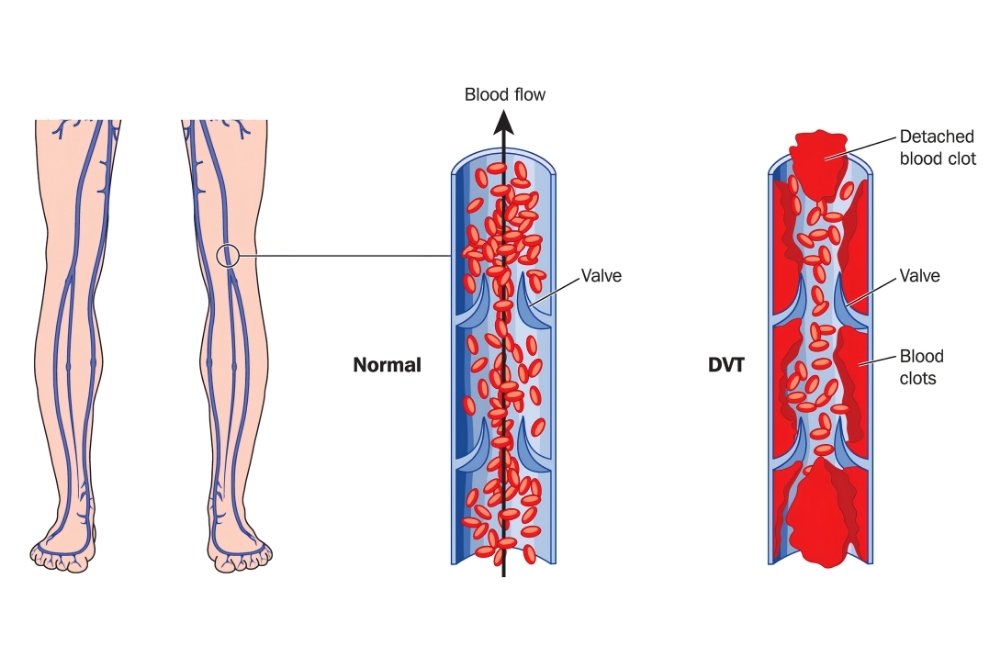
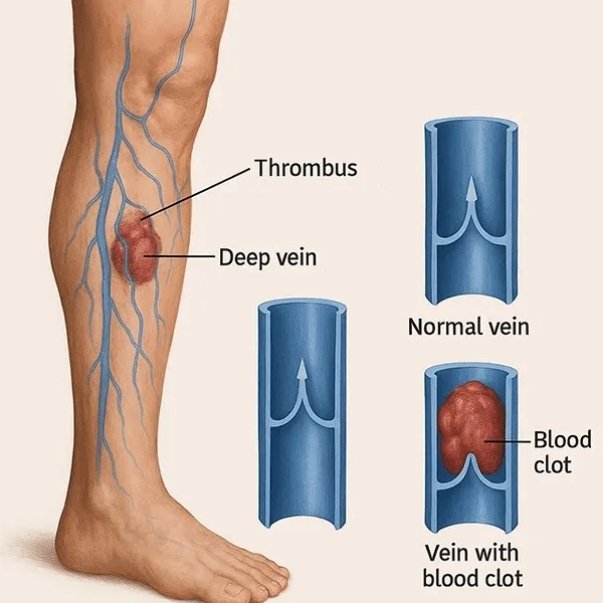
DVT occurs when blood clots inside a deep vein, most commonly in the calf or thigh, instead of flowing freely back toward the heart. This happens when one or more of three factors are present: slowed blood flow (from immobility, long travel, or bed rest after surgery), damage to the vein wall (from injury, surgery, or inflammation), or a tendency for blood to clot more easily (from certain medical conditions, hormonal medication, pregnancy, or inherited clotting disorders). The clot itself causes the leg symptoms- swelling, pain, warmth, by blocking normal blood return. The more serious risk is that part of the clot breaks off and travels through the bloodstream to the lungs, causing a pulmonary embolism, which can be life-threatening and is why sudden one-sided leg swelling is treated as urgent until proven otherwise. Dr. Malay Patel evaluates and treats DVT in Ahmedabad, with decisions guided by ultrasound findings, clot location, and how long the clot has been present.
What is Deep Vein Thrombosis?
Deep vein thrombosis is a blood clot that forms in one of the deep veins, most often in the leg, and can block normal blood flow back to the heart. Left untreated, it can cause lasting leg swelling and, in some cases, break loose and travel to the lungs, a medical emergency. DVT is more common after major surgery (especially hip, knee, or abdominal surgery), during hospital admission with reduced mobility, during pregnancy and the weeks after delivery, with long-haul travel, with active cancer, and with certain inherited or acquired clotting disorders. It also recurs more often in people who have had a previous clot.
Symptoms of DVT
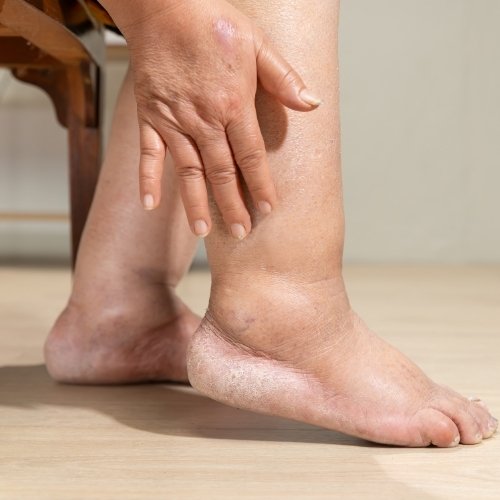
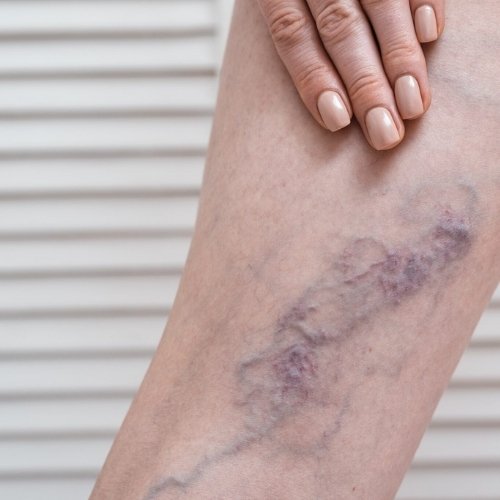
Swelling in one leg
Usually localized to the calf or thigh, often asymmetrical.
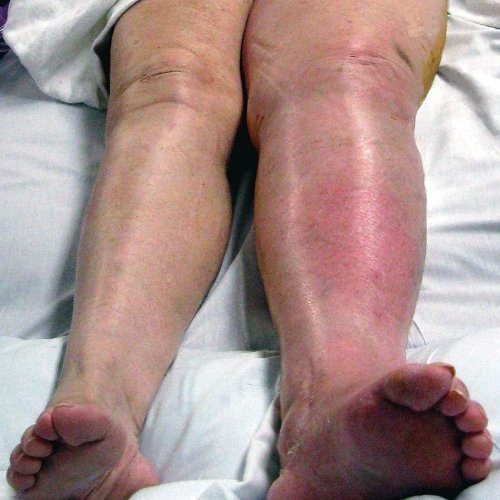
Redness or warmth
Skin may appear discolored or feel warm to the touch.
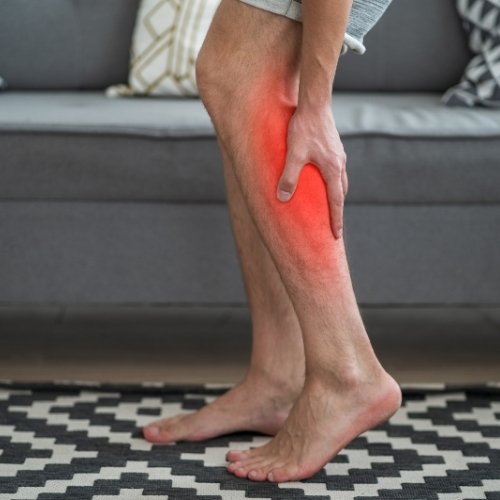
Pain or tenderness
Cramping, aching, or a heavy sensation in the affected leg.
Heaviness or fatigue
Legs may feel tired or weak, making daily activities uncomfortable.
Causes and Risk Factors
DVT can occur due to slowed blood flow, vein injury, or increased clotting tendency. Common risk factors include:
Prolonged immobility
Long flights, bed rest, or sedentary lifestyle.
Medical Condition
Cancer, heart disease, or inherited clotting disorders.
Surgery or trauma
Recent surgery, fractures, or injuries increase risk.
Lifestyle factors
Obesity, smoking, and hormonal therapy can contribute to clot formation.
Dehydration
Insufficient fluid intake can make the blood thicker, increasing the risk of clot formation in the deep veins.
- Prolonged immobility
Long flights, bed rest, or sedentary lifestyle.
- Medical condition
Cancer, heart disease, or inherited clotting disorders.
- Surgery or Trauma
Recent surgery, fractures, or injuries increase risk.
- Lifestyle factors
Obesity, smoking, and hormonal therapy can contribute to clot formation.
- Dehydration
Insufficient fluid intake can make the blood thicker, increasing the risk of clot formation in the deep veins.
Complications
Untreated DVT can lead to:
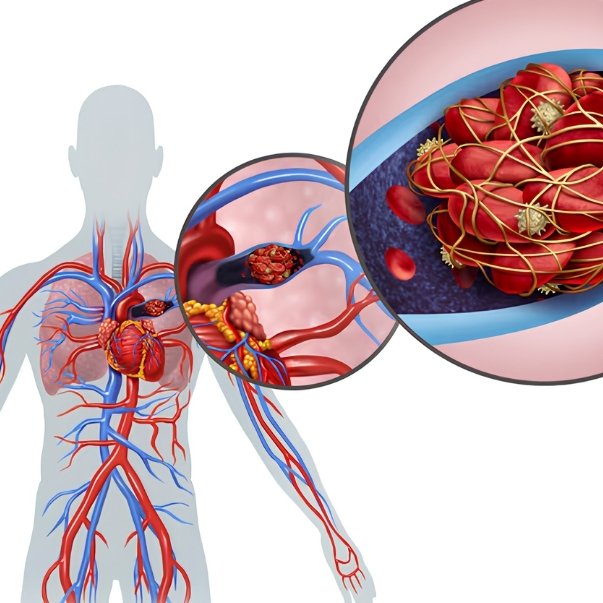
Pulmonary embolism (PE)
A life-threatening clot in the lungs.
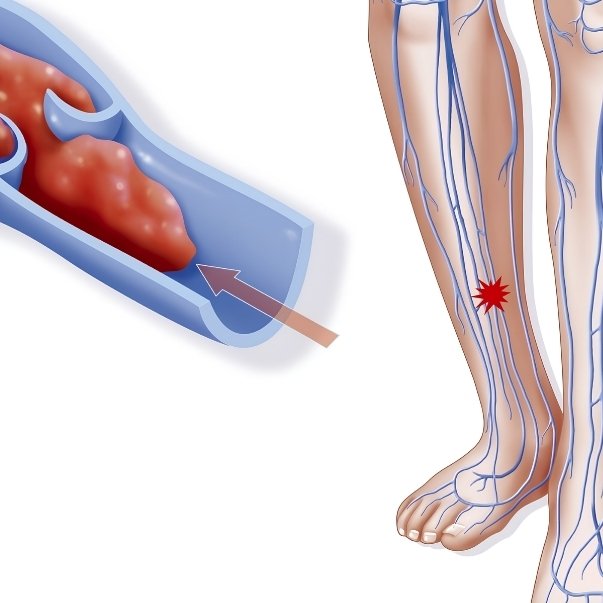
Post-thrombotic syndrome
Chronic swelling, pain, and skin changes in the affected leg.
Recurrent DVT
Higher likelihood of future clots without proper treatment.
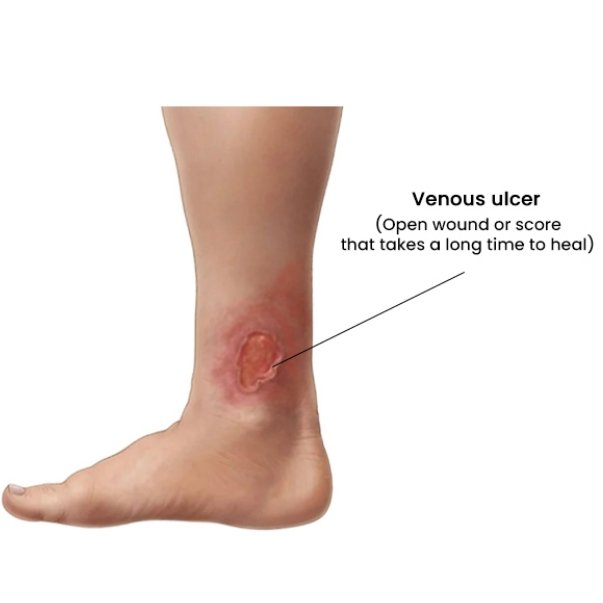
Venous ulcers
Poor circulation may lead to non-healing wounds over time.
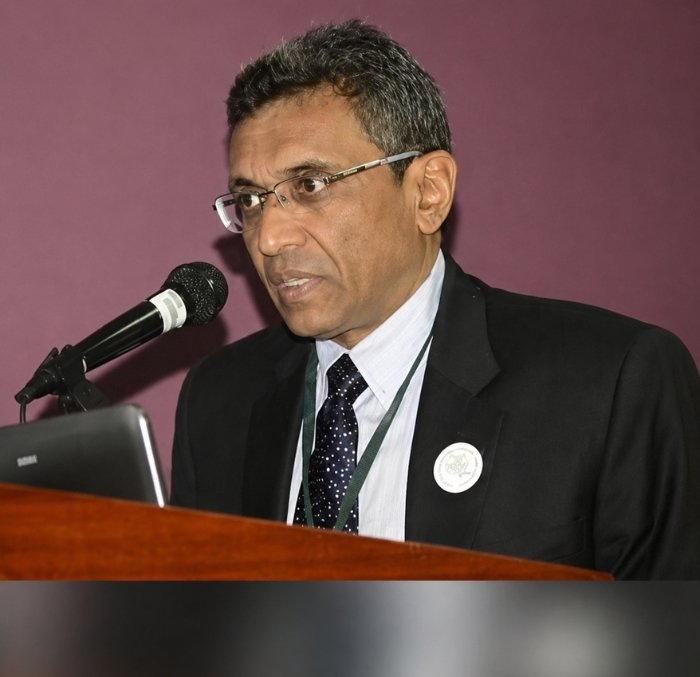
Meet DVT Specialist in Ahmedabad
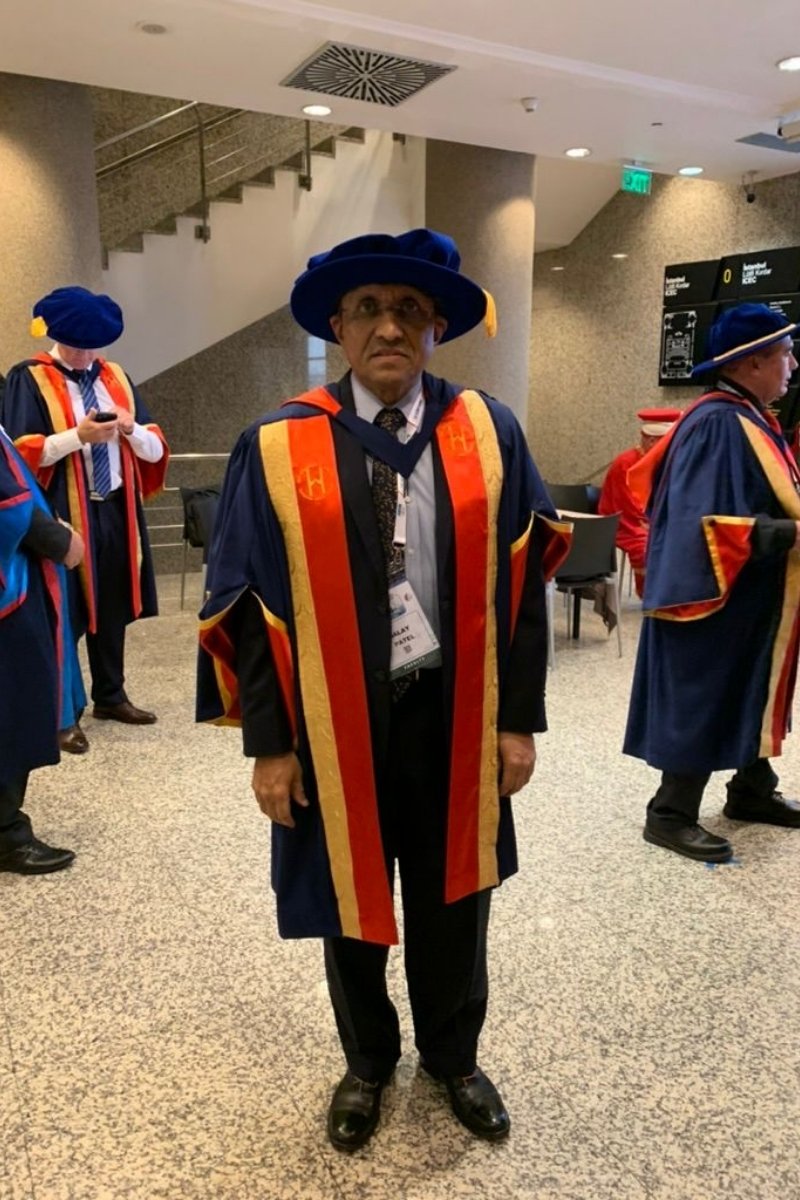
Dr. Malay Patel has been in practice as a vascular and endovascular surgeon since 1991, with venous disease including the diagnosis, treatment, and long-term management of DVT, as a core part of his work for over two decades. He is currently attached to Apollo Hospital and SVP Hospital in Ahmedabad, and previously served as Assistant Professor of Vascular Surgery at Sheth V.S. General Hospital and Sheth K.M. School of Post-Graduate Medicine and Research from 2007 to 2018.
His standing in venous disease has been recognized internationally: he was Founding President of the Venous Association of India (2007–2009), served on the executive committee of the International Union of Phlebology from 2013 to 2021, including terms as Vice-President and Assistant General Secretary, and was President of the Vascular Society of India from 2003 to 2005. He has served as a peer reviewer for the journal Phlebology since 2013 and for the European Journal of Vascular and Endovascular Surgery since 2008, a role that involves evaluating other surgeons’ published research on venous and vascular conditions. He is currently also an active peer reviewer for the Journal of Vascular Surgery – Venous and Lymphatic Disorders, the highest-indexed journal in vascular and endovascular surgery.
His practice, First Choice Vascular, evaluates suspected DVT with same-day duplex ultrasound, manages anticoagulation directly, and for cases where it’s warranted, performs catheter-directed clot removal and IVC filter placement, rather than referring these procedures elsewhere.
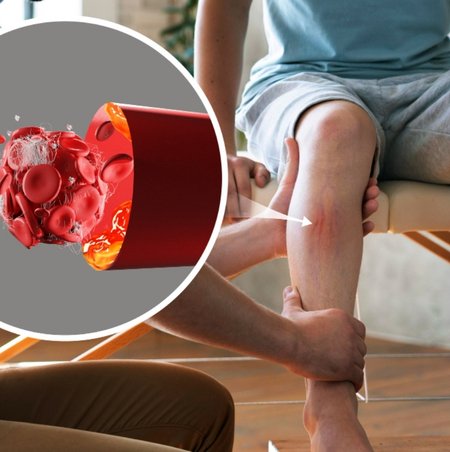
Treating the clot today, protecting the leg for years after.
Not every DVT needs a hospital stay or a procedure. Depending on where the clot is, how long it’s been there, and your overall risk, treatment may involve blood thinners alone, compression, or – in select cases, a catheter-based procedure to remove the clot directly.
Anticoagulation (Blood Thinners)

The foundation of DVT treatment for almost all patients. These medications don’t dissolve the existing clot but prevent it from growing and prevent new clots from forming while the body’s own systems gradually break down the existing one. Typically continued for three to six months, sometimes longer depending on the underlying cause.
Compression Stockings
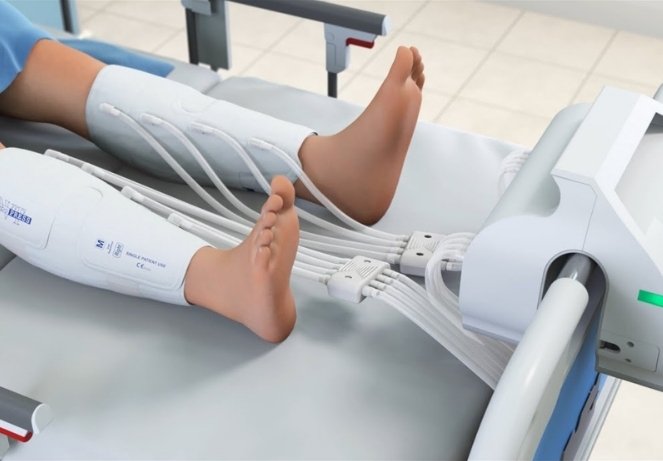
Used alongside anticoagulation to reduce swelling and lower the risk of post-thrombotic syndrome, particularly for clots in the thigh.
Catheter-Directed Thrombolysis or Mechanical Thrombectomy
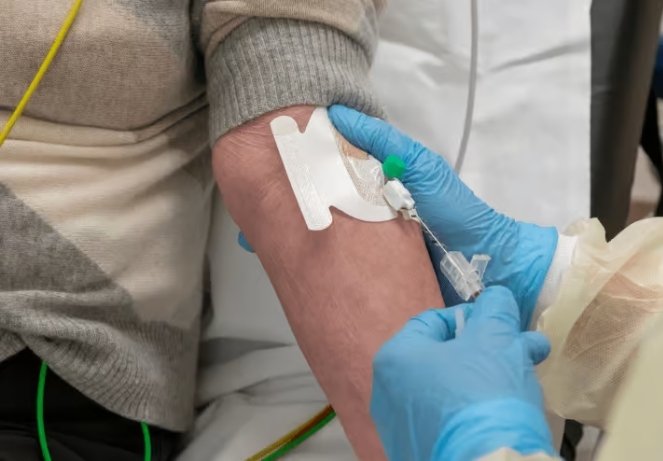
For selected patients with extensive clots in the thigh or pelvis caught early, a catheter is used to deliver clot-dissolving medication directly to the clot or to remove it mechanically, reducing the amount of vein damage and lowering the risk of long-term swelling.
IVC Filter
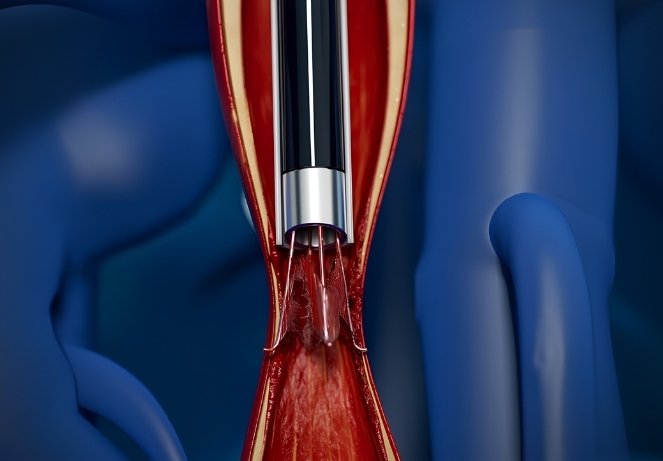
A small device placed in the main vein returning blood from the lower body, used only when blood thinners cannot be given or aren’t working, to physically prevent a clot from reaching the lungs. Not a routine treatment, used for specific situations only.
Deep Vein Thrombosis Specialist in Ahmedabad: Why Vascular Background Matters
DVT sits at the boundary of two specialties, general medicine, which manages most anticoagulation, and vascular surgery, which is needed when clot-removal procedures, IVC filters, or complications like post-thrombotic syndrome and chronic venous damage are involved. Dr. Malay Patel has practiced vascular and endovascular surgery in Ahmedabad since 1991, with venous disease specifically as a long-standing area of focus.
01. Vascular and Endovascular Background
A vascular surgery background means access to catheter-based clot-removal procedures and IVC filter placement when anticoagulation alone isn't sufficient, rather than referring out for these when a case needs them.
02. Founding President, Venous Association of India
Leading the body dedicated to venous disease in India (2007–2009) reflects a career built around the venous system specifically, which includes the long-term consequences of DVT such as post-thrombotic syndrome, not just the acute clot event.
03. Executive Committee, International Union of Phlebology
Committee roles between 2013 and 2021, including Vice-President and Assistant General Secretary, involved shaping shared clinical positions internationally on venous disease, of which DVT and its aftermath are a core part.
04. Peer Reviewer for International Journals
Reviewing for the European Journal of Vascular and Endovascular Surgery since 2008, Phlebology since 2013, and currently the Journal of Vascular Surgery – Venous and Lymphatic Disorders, the highest-indexed journal in vascular and endovascular surgery, involves direct engagement with the evidence behind current DVT management before it reaches publication.
Advanced Interventions. Safer Outcomes.
Answers to Your Most Common Questions
Will I need to be hospitalized?
Many DVT cases, once confirmed and assessed as low-risk for complications, are managed as outpatients with injectable or oral anticoagulation. Hospitalization is usually needed for extensive clots, pelvic involvement, suspected pulmonary embolism, or if a clot-removal procedure is planned.
How long will I need to be on blood thinners?
Typically three to six months for a first clot with a clear temporary cause, such as recent surgery. Clots without a clear cause, or recurrent clots, often need longer treatment, sometimes indefinitely, which is decided based on your specific risk factors.
Can DVT come back?
Yes, particularly if the underlying cause – surgery, immobility, an inherited clotting tendency, or active cancer is still present or recurs. This is why identifying the cause matters, not just treating the current clot.
Is it safe to fly or travel after a DVT?
Travel is generally avoided in the first few weeks after diagnosis while anticoagulation is being established, and for longer journeys afterward, compression stockings and regular movement during travel are advised.
Will my leg go back to normal?
Most patients see swelling improve substantially within weeks to a few months. Some experience residual heaviness or mild swelling, particularly with more extensive clots, which is why long-term follow-up and compression stocking use are part of the plan for higher-risk cases.
Have More Questions? Fill Out Our Quick Form and Get Answers
If you have sudden leg swelling, especially in one leg, don't wait to see if it settles on its own. An ultrasound can confirm or rule out a clot within the same visit.